

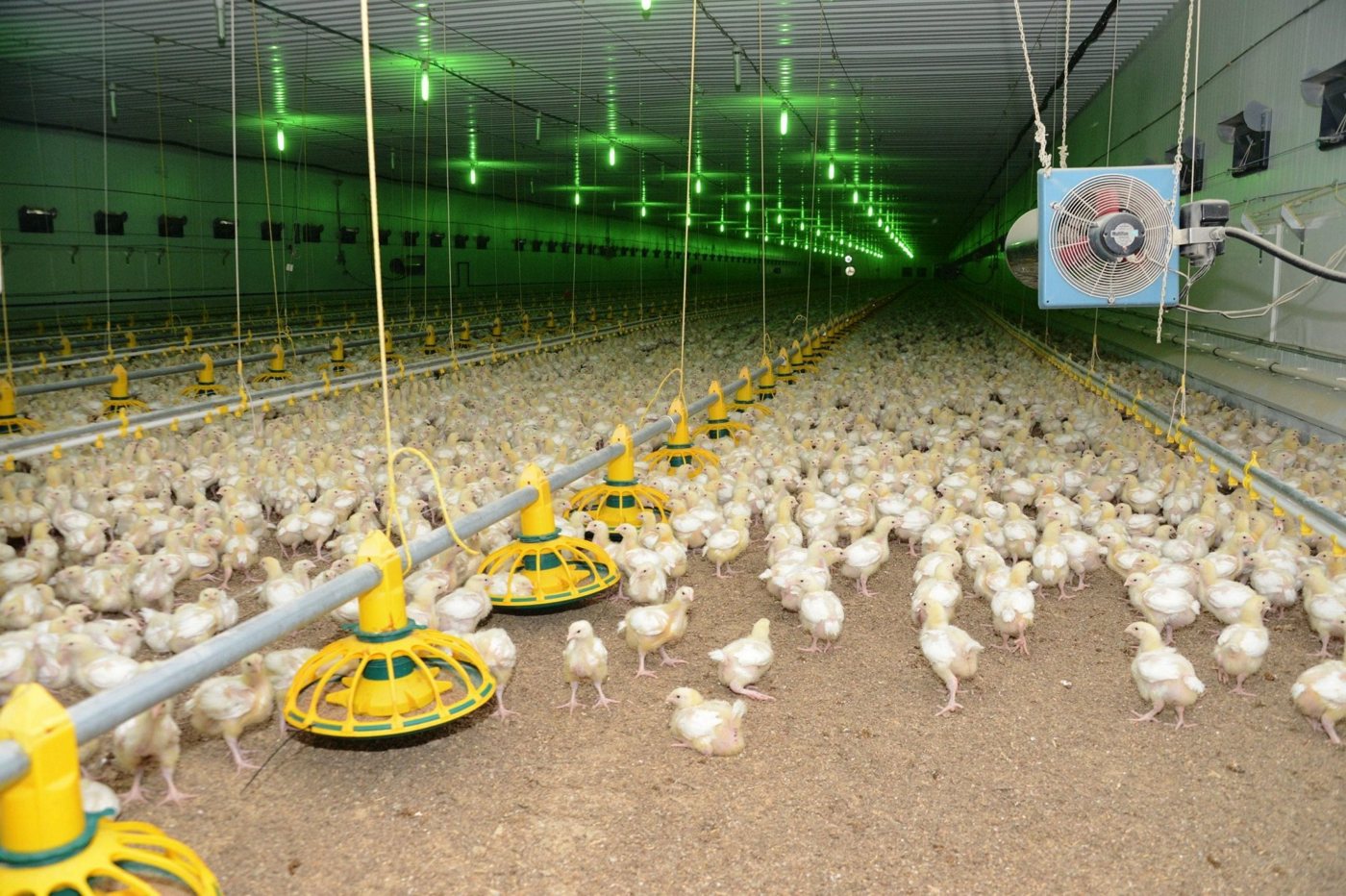
Temperature range
For chicks aged 1–21 days, the air temperature in the poultry house should be 21 °C.
For young birds aged 21–49 days: 16 °C.
For adult hens: around 8 °C.
Air temperatures above the normal range adversely affect egg production and eggshell quality and reduce egg weight. At these temperatures, hens breathe faster, drink more water, refuse feed and sit with their beaks open and wings spread.
When the air temperature in the poultry house is within the normal range, hens eat well, drink moderate amounts of water, remain active and spread evenly throughout the house.
If the air temperature falls below the normal range, hens huddle together, which can lead to suffocation.
Relative humidity
Relative humidity in the poultry house should be 60–70%.
To maintain normal humidity, install a ridge supply-and-exhaust ventilation system that admits fresh air and removes moist air, harmful gases and excess heat.
Lighting
The poultry house should have electric lighting in addition to natural light. Use 40–60-watt incandescent or fluorescent lamps for this purpose.
The normal illuminance inside a poultry house is 20 lux (lx).
Insufficient lighting reduces feed and water intake, leading to lower egg production and poor live-weight gain.
Excessive lighting can lead to cannibalism among hens.
During the first days of a chick’s life, poultry house illuminance should be 30–50 lx. As the chicks grow, gradually reduce it to 20–25 lx. For chicks of meat-type chicken breeds, illuminance in the poultry house should not exceed 5 lx.
If the poultry house has windows, adjust the lighting program according to natural day length and the time the chicks hatch. Increase lighting during the laying period. Starting from the chicks’ first day of life, gradually reduce lighting.
For egg-type chicken breeds, starting at five months of age, increase the duration of lighting by 30 minutes each week until it reaches 17 hours.
For meat-type chicken breeds, starting at six months of age, increase the duration of lighting by 30 minutes every 2 weeks until it reaches 18 hours