

27 February 2017 15:43
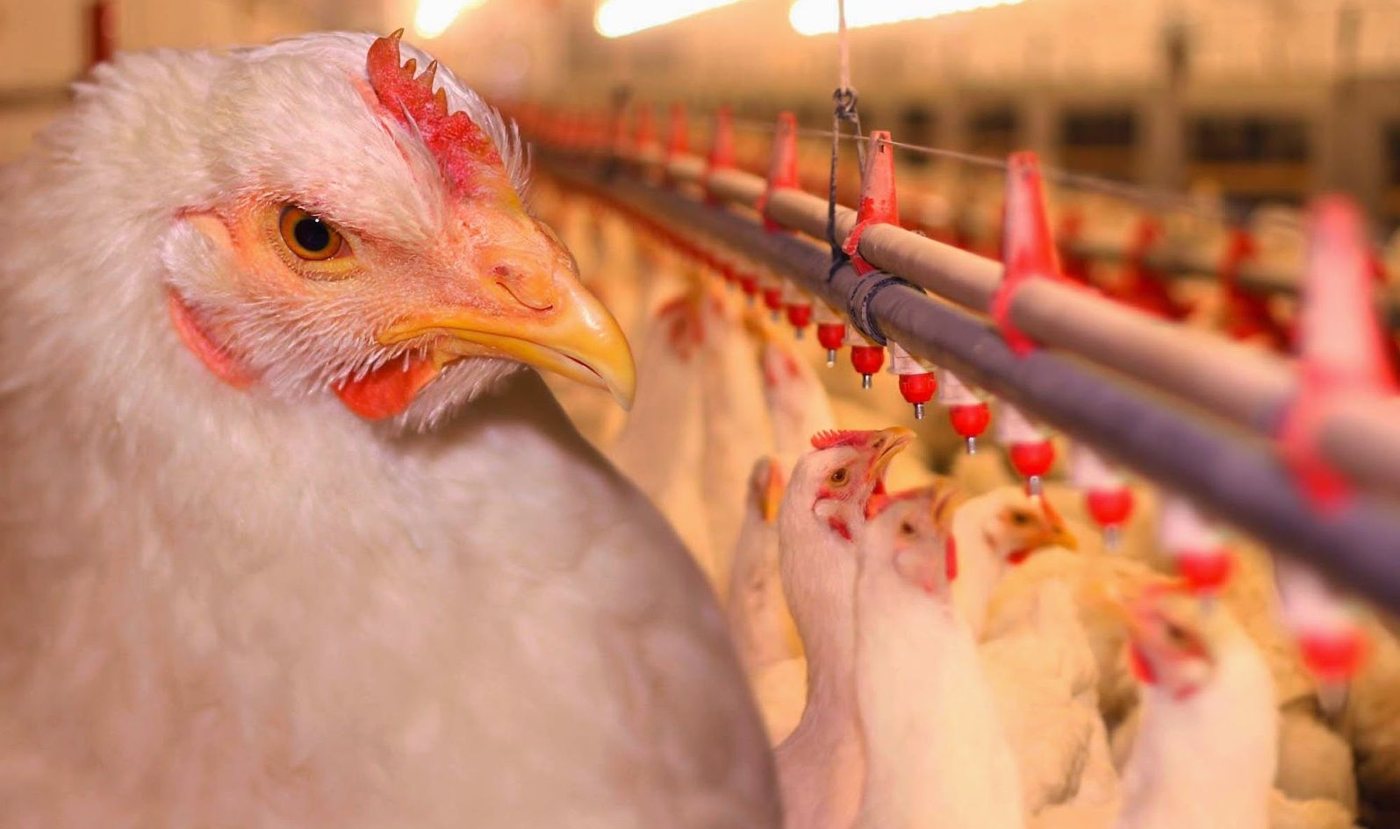
According to the Ministry of Economic Development, poultry meat consumption in Russia will continue to increase in the coming years. Poultry imports into our country have begun to decline in recent years, which means that domestic producers will become more active. Various sources put the profitability of poultry production at up to 60%. Despite growing competition in the poultry-meat and chicken-egg markets, a well-managed small poultry farm is a profitable business. Entrepreneurs starting a small poultry farm should begin by: - Determining the size of the future farm (500 birds, 1000 birds, etc.); - Choosing premises and equipment for the future farm; - Finding suppliers of young chickens; - Planning the feed supply; - Choosing sources of project financing; - Studying poultry husbandry techniques. Let us consider an example of starting a small poultry farm with 1000 birds. We assume that the premises are already available and no construction expenditure is required. Possible sources of financing include: - Participation in the government support program for new entrepreneurs, “Grant for Starting Your Own Business”. The subsidy under this support program is 300 thousand rubles. Agricultural businesses are a priority, so the chance of receiving support is high; - Participation in the government support program for farmers. The chance of receiving support in this case is lower than under the first option, because participation is open to existing farms. However, support amounts to approximately 1.5 million rubles; - Participation in preferential lending programs. Some banks offer low-interest loans to agricultural organizations (from 12%); Main project startup costs: Expense item Amount, rubles - Layer chicks aged 30 days 30 000 - Broiler chicks aged 30 days 55 000 - Cages 100 000 - Other equipment (drinkers, buckets, etc.) 40 000 - Premises refurbishment 50 000 - Other 20 000 Total 295 000 Thus, initial investment to start the project, assuming premises are available, totals 295 thousand rubles. 2. Business information / Business registration The best legal structure is a family farm registered as an individual entrepreneur. This choice requires few documents and minimal business registration costs. The unified agricultural tax is considered the most advantageous tax regime for agricultural producers. Under this regime, tax is 6% of profit. The sole condition for applying the unified agricultural tax is that 70% of gross income for the calendar year must come from sales of agricultural products. If you plan to build the farm on your own land, the land must be registered for the appropriate permitted use. In this case, the land must be designated for agricultural facilities. Furthermore, sanitary and epidemiological service standards require a small poultry farm to be at least 300 m from residential developments. Download a poultry-farm business plan from our partners for just 550 rubles, with a quality guarantee. 3. Products and services A small poultry farm can operate in several areas: 1. Production of poultry meat and chicken eggs, followed by sale of the finished products to the public; 2. Installation of an in-house incubator to hatch young poultry (chicks). The following chicken breeds are suitable: Egg-laying breeds, such as Leghorn, or commercial layer crosses. They mature early, with average egg production in this category of up to 200 eggs per year; Meat breeds, including Cornish, Brahma and Cochin, and the Cobb 500 broiler cross. Adult males reach a live weight of 5 kg, and hens up to 3 kg. 4. Production plan Housing 1000 birds requires premises of at least 100 m2. Cage housing should be used to make more efficient use of space. The recommended cage stocking density is 5 birds per 1 m2. To save space, cages can be arranged in 2–3 tiers. Cages can be made in-house or purchased from a manufacturer. The price of 1 cage for 5 birds starts at 2000 rubles. If the poultry farm plans to hatch replacement stock, Russian equipment is suitable: the ILB-0.5M incubator. The incubator holds 770 chicken eggs. The incubation period for chicks is 21–22 days. Meat and egg-laying chickens are assumed to be kept in equal proportions, with 500 birds in each group. Planned annual output from a small poultry farm with 1000 birds: Meat poultry (broilers) reach slaughter weight on average by day 50. Accordingly, up to 6 batches can be reared in 1 year. In total, approximately 3000 birds, or 9 tonnes of poultry meat, will be produced in 1 year. Egg-laying poultry produce up to 200 eggs per year on average. Accordingly, 500 laying hens will produce up to 100 thousand eggs in 1 year. One of the main principles of proper poultry management is maintaining a favorable indoor environment. Chicks and older chickens must be kept in separate rooms because their heating and lighting requirements differ. For example, day-old chicks require a temperature of 34 degrees, whereas 18 degrees is sufficient for 60-day-old chickens. When rearing young birds in cages, continuous lighting is recommended during the first 3 weeks. As the birds grow, artificial lighting is reduced to 17 hours. Chicken diets must include grain, feeds of plant and animal origin, meal mixtures, and feeds rich in vitamins and easily digestible protein. 5. Organization plan At least three workers are needed to carry out all poultry-farm operations, including feeding birds, collecting eggs, slaughtering adult birds and so on. Staffing schedule: Position Number of staff Monthly payroll, rubles General worker 3 30 000 Annual total X 360 000 6. Marketing plan The farm’s main competitors will be large poultry farms with their own poultry-meat and egg retail outlets. Such businesses generally maintain relatively low prices and have already established a large base of regular customers. - Selling products through mobile trading in high-traffic locations, such as markets; - Supplying products to retail outlets in nearby districts; - Selling products directly from the farm to wholesale businesses. Ideally, the farm should establish its own sales outlets (pavilions or kiosks), but this requires much higher production volumes and a different level of investment. One competitive advantage is that products from a small poultry farm are raised in a “home-farm” environment. The meat and eggs are of good quality, which is undoubtedly a major advantage. For transport within the district, all products offered for sale must be accompanied by Form No. 4 veterinary certificates “on the clinical examination of poultry”. These documents are prepared and issued by the authorities and institutions within the State Veterinary Service of the Russian Federation at the business’s location. 7. Production plan Item Unit Price, rubles Monthly sales volume Monthly revenue, rubles Poultry meat kg 100 750 75000 Eggs pieces 4 8 330 33320 Total 108320 Thus, finished products worth 108, 3 thousand rubles will be sold each month. Monthly expenses: Item Amount, rubles - Wages 30000 - Feed and vitamins 10000 - Taxes, unified agricultural tax at 6% 3000 - Contributions to extrabudgetary funds 9000 - Utilities 5 000 - Purchases of day-old chicks 9000 - Other 4000 Total 70 000 Thus, the small poultry farm’s monthly expenses total 70 thousand rubles. Let us calculate the main business performance indicators: Monthly profit: 38 320 rubles. Profitability: 54.7%. Project payback period: 8 months. Adjusting the balance between meat and egg production can achieve higher business profitability. For example, keeping 700 meat birds and 300 egg-laying birds.