
18 April 2024
This provision appears in draft new veterinary rules for keeping birds for breeding, rearing and sale, developed by Russia’s Agriculture Ministry. Veterinary Medicine and Life has obtained the document. The new rules are scheduled to take effect on 1 March 2025, replacing the document adopted in 2006.
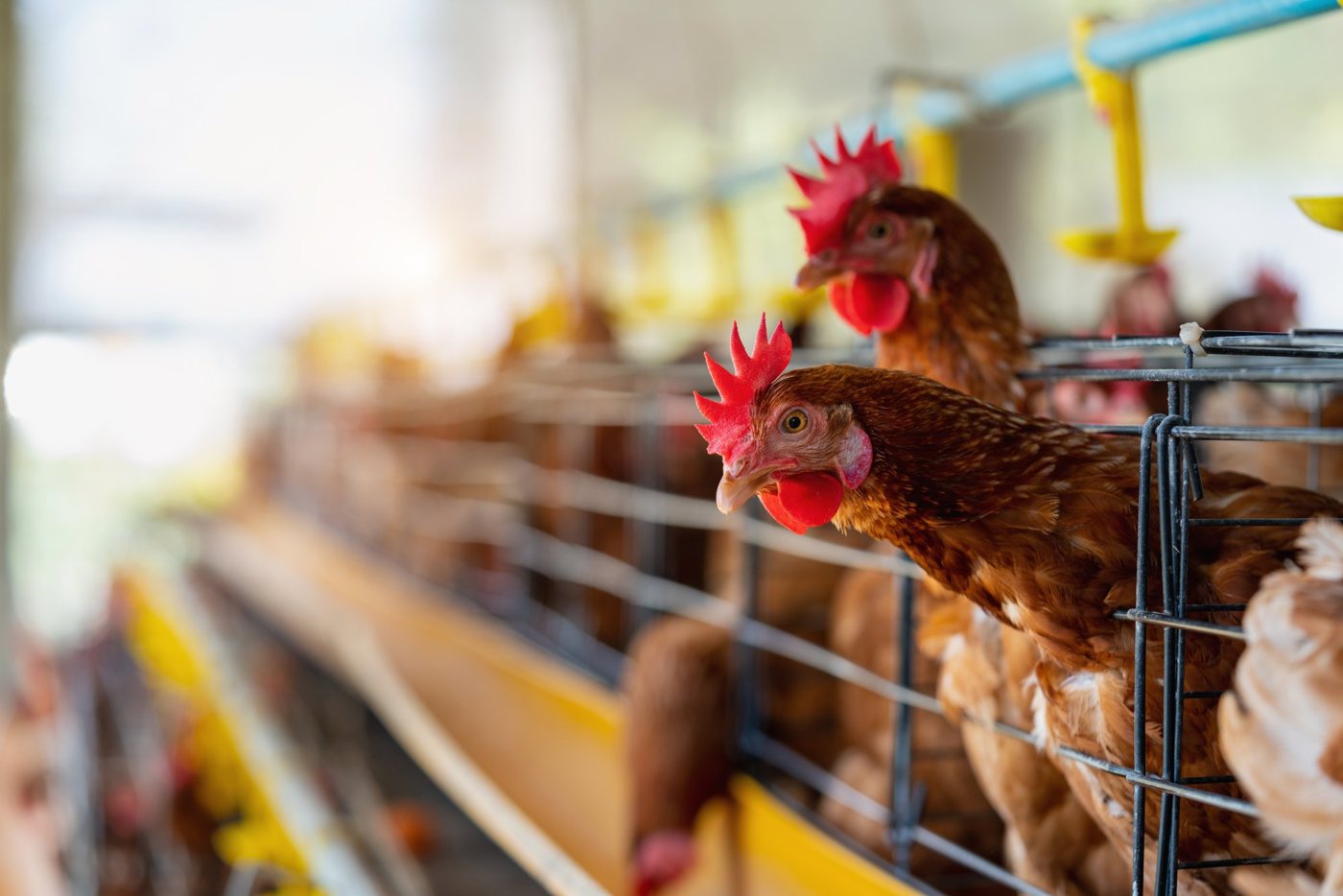
‘Small and large farms, as well as enterprises, shall use floor housing systems, with or without runs, or cage housing systems for poultry. Keeping birds with access to unrestricted outdoor ranges is not permitted. Outdoor access for birds kept at enterprises is not permitted,’ the draft veterinary rules state.
The new rules will be mandatory for private household farms, peasant farms and poultry enterprises.
Vladimir Fisinin, President of the Russian Poultry Union and a member of the Russian Academy of Sciences, considers the ban on unrestricted outdoor access for farm birds appropriate. ‘This is the right approach in terms of biosecurity and preventing the spread of infectious and parasitic animal diseases,’ Vladimir Fisinin told Veterinary Medicine and Life. Free-ranging poultry can come into contact with wild birds, risking the introduction of infectious animal diseases onto farms. The animal disease situation in European countries confirms this.
‘Avian influenza is spreading extensively in Europe, where animal legislation is lenient and cage-free, free-range poultry keeping is practised. This brings farm birds into contact with wild birds and results in flocks becoming infected with avian influenza,’ Yulia Melano, adviser to the head of Rosselkhoznadzor, told Veterinary Medicine and Life.
According to the supervisory agency, outbreaks of highly pathogenic avian influenza were recorded in 22 European countries from the beginning of 2024 to 5 April. A total of 412 outbreaks were identified among domestic and wild birds in European countries.
In addition to animal disease problems, free-range keeping can increase injuries among chickens, Vladimir Fisinin adds. ‘Birds peck at one another when kept free-range. On average, the flock in a poultry house decreases by 20%. Strong birds peck weaker ones to death; birds hide and do not get feed or water. Egg production declines,’ the academic explained.
However, Russian organic producers have expressed concern that banning unrestricted outdoor access for farm birds will hinder the development of organic poultry farming.
‘Organic production is governed by the principal standard GOST 33980-2016, whose section 6 sets out the rules for keeping birds for organic production. Free-range access is required, and artificial lighting must not exceed 16 hours a day. The new rules completely abolish free-range access, making organic production impossible,’ the Union of Organic Farming told Veterinary Medicine and Life.
Vladimir Fisinin disagrees with this position. He points out that organic production depends largely on the birds’ diet. ‘Feed must be based on grain grown without chemicals or mineral fertilizers,’ the academic said.
What else the new veterinary rules contain
The document specifies floor area requirements per bird. These requirements are set out for chickens, turkeys, ducks and geese. Stocking density requirements are also specified.
The rules specify the distance that must separate poultry houses from residential areas. For a small farm with 100 birds, the distance to residential buildings must be at least 10 metres; for a large enterprise with 1,000 birds, it must be at least 500 metres.
In addition to poultry houses, the rules require poultry keepers to have an isolated quarantine room and a separate area for keeping and treating sick birds and birds suspected of being ill. A site for storing and decontaminating manure, a place to store veterinary medicines, and a room for feed and bedding materials are also required.
The rules set requirements for maintaining and treating poultry premises, disinfection and the condition of feeders and drinkers, and also specify water consumption standards for birds.
Source: vetandlife.ru